


How Does Organizational Structure Impact Project Management?
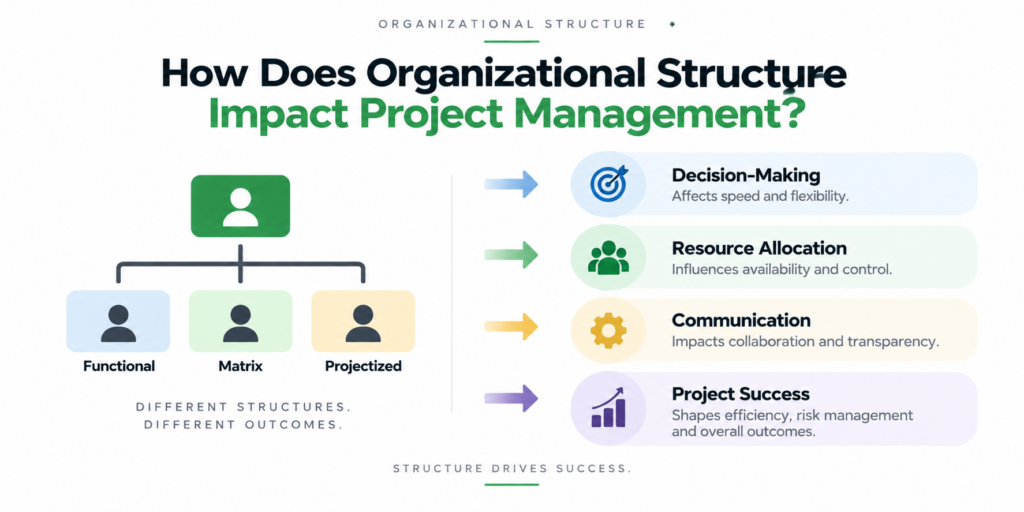
Organizational structure determines a project manager’s authority level, resource access, and reporting lines, directly shaping how fast decisions get made and how projects get resourced. The PMBOK® Guide recognizes 6 organizational structure types along a continuum from functional to projectized, and a project manager’s authority increases at each step along that continuum. Choosing the wrong structure for a given project doesn’t just slow it down — it changes who controls the budget, who assigns staff, and who has final say when priorities conflict.
What Are the Main Types of Organizational Structure in Project Management?
The PMBOK® Guide identifies 6 organizational structure types: functional, weak matrix, balanced matrix, strong matrix, projectized, and composite. Each type sits at a different point on the authority continuum, and each grants the project manager a different level of control over budget, staffing, and priorities.
- Functional: Departments organize around specialized skills; the functional manager, not the project manager, controls the budget and staff.
- Weak matrix: Preserves most functional authority; the project manager acts as a coordinator or expediter with limited decision-making power.
- Balanced matrix: Splits authority evenly between the project manager and the functional manager.
- Strong matrix: Grants the project manager significantly more authority than the functional manager, while functional departments still exist.
- Projectized: Organizes the company entirely around projects; the project manager holds full authority over budget and staff.
- Composite: Blends 2 or more structures within the same organization, often running a functional core alongside dedicated project teams for specific initiatives.
How Does Organizational Structure Affect a Project Manager’s Authority?
A project manager’s authority, resource availability, and budget control increase directly as the organization moves from functional toward projectized. The table below reflects the authority levels the PMBOK® Guide assigns to each structure type.
| Structure | PM Authority | Resource Availability | Who Controls the Budget | Typical PM Role Title |
| Functional | Little or none | Little or none | Functional manager | Coordinator or none |
| Weak Matrix | Low | Low | Functional manager | Coordinator or expediter |
| Balanced Matrix | Low to moderate | Low to moderate | Mixed | Project manager |
| Strong Matrix | Moderate to high | Moderate to high | Project manager | Project manager |
| Projectized | High to almost total | High to almost total | Project manager | Project manager |
| Composite | Mixed | Mixed | Mixed | Varies by initiative |
How Does Structure Impact Communication in Project Management?
Flatter structures shorten communication paths; hierarchical structures add approval layers that slow information flow. Projectized teams report through one dedicated chain, which speeds up direct communication. Functional structures route communication through departmental silos, which creates bottlenecks when a project needs input from multiple departments at once.
How Does Structure Impact Resource Allocation in Project Management?
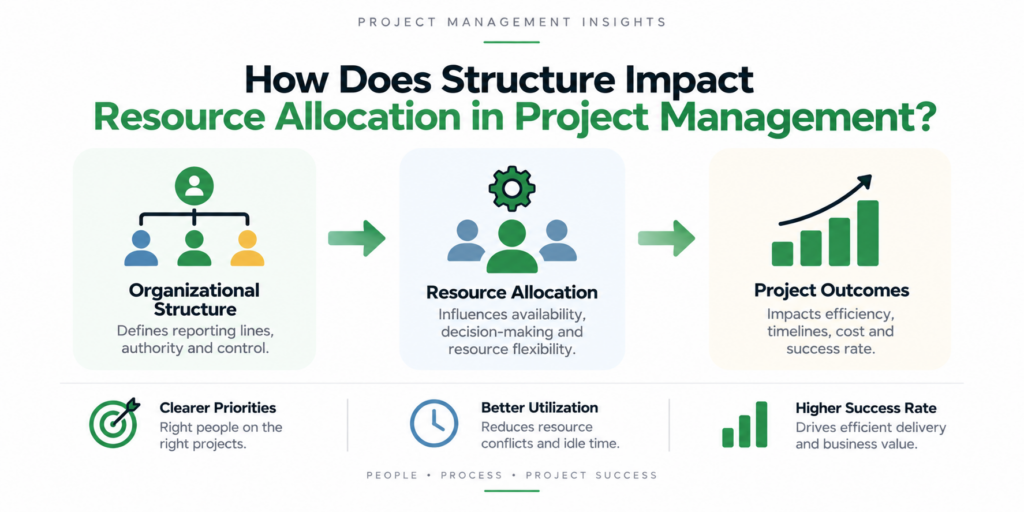
Centralized functional structures allocate resources through top-down departmental decisions; projectized structures dedicate resources to a single project for its full duration. Matrix structures sit between the two and face the sharpest resource allocation challenge, since team members split their time and report to both a functional manager and a project manager simultaneously.
How Does Structure Impact Decision-Making in Project Management?
Hierarchical functional structures slow decision-making through multiple approval layers; flatter projectized structures let the project manager decide directly. A strong matrix approximates projectized-level decision speed while still preserving the functional department’s specialized expertise underneath it.
Which Organizational Structure Fits Your Project?
Structure choice depends on project volume, complexity, and how much dedicated focus a project needs against the value of retaining functional expertise. 3 scenarios point toward each structure:
- Choose functional for organizations running a high volume of similar, routine projects where specialized departmental expertise matters more than dedicated project focus.
- Choose projectized for organizations managing complex, high-stakes projects that need a fully dedicated team and fast decision-making, common in consulting and IT delivery firms.
- Choose matrix for organizations running multiple simultaneous projects that need cross-functional collaboration without fully dismantling functional departments — selecting weak, balanced, or strong matrix based on how much authority the project manager needs relative to functional managers.
Why Does This Matter for the PMP Exam?
Organizational structure appears directly on the PMP exam, since PMI expects candidates to correctly match a project scenario to its underlying structure and the authority level that structure grants the project manager. Candidates preparing for certification study this continuum specifically to recognize how a described scenario’s resource control and reporting lines map to functional, matrix, or projectized characteristics.
Project managers building this foundational knowledge as part of certification preparation can review PMP certification training, which covers organizational structure alongside the full set of PMBOK Guide concepts tested on the current exam.